Few things in a home provoke as much winter dread or summer frustration as equipment that fails exactly when you need it most. I remember a July afternoon in Lexington when a neighbor called me frantic: their older central air had quit, the kids were miserable, and the contractor they called quoted a replacement time measured in days. We got them working again the same day with a targeted repair and scheduled a maintenance plan that prevented a repeat. That kind of outcome is what Green Energy AC Heating & Plumbing Repair aims for with its maintenance packages, and understanding those packages pays off in lower bills, fewer emergency calls, and longer equipment life.
Why maintenance matters here, not just later A furnace or air conditioner parked on a seasonal shelf is not truly idle. Dust, corrosion, refrigerant leaks, motor wear, and control problems accumulate quietly. Small issues grow into forced replacement decisions. Regular maintenance catches problems when they still cost hundreds, not thousands. Beyond immediate repairs, a well-maintained system runs more efficiently. In practical terms, a 5 to 15 percent efficiency improvement for an older AC can translate into tens of dollars a month during the hottest months. For homeowners in Lexington, where summers can push systems hard and winters require dependable heating, a maintenance plan is insurance that pays a premium in comfort and predictability.
How Green Energy structures its packages Green Energy AC Heating & Plumbing Repair offers several tiers aimed at homeowners and small businesses with different priorities: basic inspection, seasonal tune-up, and comprehensive membership that bundles priority service and discounts. Each tier outlines a predictable cadence of visits and tasks. The basic tier is for owners who want a single thorough inspection and report. The seasonal tune-up focuses on proactive service before peak heating and cooling seasons. The membership tier includes both seasonal attention and extras such as priority scheduling, reduced diagnostic fees, and modest parts discounts.
Each service visit follows a consistent checklist tailored to the equipment type, whether a central split-system air conditioner, heat pump, ductless mini-split, or gas furnace. For air conditioning, technicians check refrigerant pressures, measure superheat and subcooling when applicable, inspect condenser coil cleanliness, confirm fan motor operation, and verify thermostat calibration. For heating, they inspect burners, test safety controls, check venting for proper draft, and measure combustion characteristics if required. All plans emphasize documentation: after every visit you should receive a written report that describes what was inspected, the condition found, and recommended next steps with cost estimates.
What you actually get during a visit A maintenance visit is more than a filter change and a quick glance. Expect measurement and adjustment where it matters. Technicians should measure electrical draw on motors and compressors, assess bearing and belt condition, test capacitors, and ensure control wiring is tight and corrosion-free. For refrigerant systems, they should evaluate charge and look for slow leaks that might not yet drop operating pressure but will shorten compressor life. For older furnaces, checking heat exchanger integrity and gas pressures is a safety step, not an optional add-on.
Experience shows that these tasks reveal different problems depending on system age. A five-year-old AC might need a capacitor and a coil cleaning, a modest expense. A fifteen-year-old unit often shows refrigerant leakage and reduced efficiency, making a discussion about replacement more urgent. Good technicians present choices: repair now, repair with a part that has a known confidence interval, or replace with a modern high-efficiency unit and provide the comparison in lifecycle cost terms. Green Energy provides repair-versus-replace guidance rather than pushing replacement as a default.
The real benefits, in plain numbers Think in terms of risk reduction and cost smoothing. An emergency AC repair call during a heatwave can run 50 to 100 percent more than a non-peak repair. A maintenance member who pays an annual fee often receives waived trip charges or reduced diagnostic rates, and the company moves them ahead of the queue. Over three years, the membership can pay for itself by avoiding a single emergency surcharge and by reducing annual energy usage through improved efficiency.
Lifespan extension is another tangible benefit. Routine maintenance can add 3 to 7 years to an HVAC system depending on the starting condition. Consider a 12-year-old AC on the cusp of failure, where routine tune-ups can defer replacement for several years while saving on monthly cooling costs and preventing sudden breakdowns. For homeowners balancing budgets and comfort, that deferment is often the pragmatic choice.
Priority service and emergency repairs Emergency AC repair near me is a phrase many Lexington homeowners type into search engines at 2 a.m. When the house hits 85 degrees and the kids are restless. The difference between a company that offers emergency service and one that truly prioritizes members is noticeable. Green Energy’s higher-tier maintenance package includes priority dispatch, meaning a member who calls during extreme weather gets assigned sooner than a non-member. That is worth real money on a critically hot day.
Priority service also shortens downtime for businesses with climate-sensitive operations, like small restaurants or offices with server rooms. When delay costs are measured in lost revenue or ruined inventory, the small annual cost of comprehensive maintenance is easy to justify.
How pricing usually breaks down and what to watch for Pricing for maintenance packages varies by system complexity and home https://telegra.ph/Green-Energy-AC-Heating--Plumbing-Repair-Guide-to-Green-Upgrades-03-21 size. A basic single-system AC tune-up in the Northeast typically lands anywhere from roughly $75 to $150 per seasonal visit when purchased a la carte. Memberships that include two visits a year, waived diagnostic fees, and priority service often run in the low hundreds to several hundred annually depending on inclusions. Push for transparent pricing and itemized lists of what is covered. Avoid plans where the major repairs require separate, large fees without a clear discount.
Watch for common exclusions. Some companies exclude refrigerant recharge from standard plans, or they exclude parts like compressors and heat exchangers. Others limit number of service calls for certain issues. A straightforward contract will say which parts and labor are included and which are billed separately, and it will specify allowances for labor during peak seasons.
Common trade-offs and how to decide Choosing the right package is an exercise in risk tolerance and expected equipment life. If your AC is less than seven years old and the home is occupied year-round, a mid-tier seasonal plan makes sense. If the equipment is older than ten years, a comprehensive membership that includes priority service gives peace of mind and clearer pathways for replacement when failure becomes imminent. If you own multiple systems, or a combined heating and central AC setup, look for bundled discounts.
There is also the trade-off between repair frequency and replacement timing. In some cases, keeping an aging system running with frequent repairs costs more than replacing it. I once worked with a homeowner who spent nearly 60 percent of the replacement cost in a single season on repairs for a failing compressor and controls. After a careful lifecycle calculation that included estimated cooling-season costs and energy savings with a new unit, replacement was the better fiscal choice. The maintenance plan then shifted focus to the new equipment with manufacturer-compliant servicing to keep the warranty intact.
Examples of real service items and what they indicate A capacitor failure is a small part problem but common and instructive. Capacitors cost under $100 typically, including labor, and a failure will present as a motor that hums but does not start. Fix it promptly; running on a weak capacitor can overheat the motor and lead to a much more expensive replacement.

A recurring refrigerant leak tells a different story. If your AC needs a recharge more than once every couple of years, the system has a leak that requires location and repair. Slow leaks degrade efficiency and strain the compressor. Sometimes, leak repair and recharge make sense. Other times, the amount of refrigerant loss and the unit age push toward replacement.

Uneven temperature across rooms often points to airflow problems. Dirty coils, restricted ductwork, or failing blower motors reduce system capacity. Coil cleaning and duct sealing can restore balance and efficiency without replacing the major components.
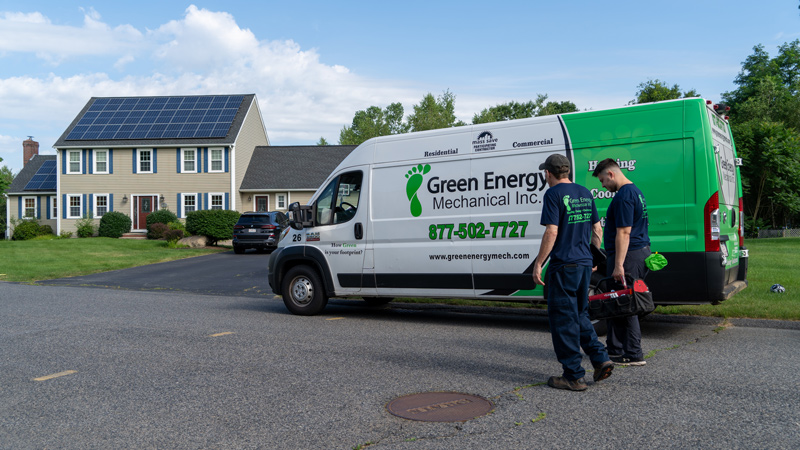
What to expect from technicians at Green Energy Technicians representing Green Energy AC Heating & Plumbing Repair should arrive cleanly presented, with a company ID, explain the work to be done, and leave the workspace tidy. They should use diagnostic instruments, not guesswork. That means a set of multimeters, refrigerant gauges, and combustion analyzers for gas furnaces when needed. You should receive an itemized report and a recommended service timeline. If replacement is recommended, estimates should include seasonal incentives, energy rebate eligibility, and financing options where available.
How maintenance ties to installation and warranties A key practical detail often missed is that many modern equipment warranties require regular professional maintenance to remain valid. Manufacturers want documented proof that annual inspections and tune-ups occurred. Membership plans that provide written records help maintain warranty coverage, which in turn protects you financially if a major component fails. If you are considering AC installation in Lexington, insist that your contractor outlines the maintenance requirements for the new unit and offers packages that align with the warranty terms.
One more local consideration Lexington’s climate subjects systems to both humidity and temperature swings. That combination stresses both cooling and heating equipment. Timely coil cleanings reduce moisture-related mold and corrosion. For gas systems, cold snaps increase cycling and the chance that a neglected flue or draft is problematic. Choosing a local HVAC contractor familiar with these local patterns matters. Green Energy AC Heating & Plumbing Repair is positioned to respond quickly within town limits, and they understand how local microclimates affect system performance.
A brief, practical checklist you can use when comparing plans
- frequency of visits per year and what each visit includes emergency/priority response time and any associated fees parts and labor coverage, and specific exclusions documentation provided for warranty compliance bundled discounts for multiple systems or combined heating and cooling plans
Making the choice Start by identifying your objectives. Is your priority minimizing surprise costs, maximizing equipment life, or getting the fastest response during extreme weather? Next, match equipment age and condition to a plan tier. For newer systems, a seasonal tune-up to maintain warranty compliance is usually enough. For older systems, or for owners who want peace of mind during peak seasons, the full membership with priority service delivers value that shows up in fewer sleepless nights and fewer emergency ambulance calls for your HVAC.
If you live in Lexington and you search for AC repair in Lexington MA or Emergency AC repair near me, you will find many options. Look for clear pricing, technical competence, and a willingness to give honest recommendations. Green Energy AC Heating & Plumbing Repair sells repair and installation, but their maintenance packages exist to reduce the number of emergency calls and to extend the usefulness of your existing equipment. The result is simpler household budgeting, better comfort, and a mechanical system that behaves predictably when the extremes arrive.
If you want a next step, schedule a diagnostic visit during a non-peak season. Ask for a written assessment, a comparison of repair versus replacement costs including estimated energy savings, and a breakdown of what the company will do during each maintenance visit. That conversation often clarifies which package is the right fit, and it usually prevents the late-night search for emergency AC repair near me that nobody wants to make.
Green Energy AC Heating & Plumbing Repair
76 Bedford St STE 12, Lexington, MA 02420
+1 (781) 630-7573
[email protected]
Website: https://greenenergymech.com